Jakarta, December 8, 2025 — As technology accelerates and artificial intelligence (AI) reshapes the global communication landscape, the International Association of Business Communicators (IABC) Indonesia highlighted the growing challenges to public trust in an era increasingly vulnerable to deepfakes. At this year’s IABC Indonesia Conference and Awards, held annually since 2022, the dialogue centered on trust-based strategic communication, humanity, and digital impact, featuring leading voices from government, industry, academia, civil society, and communities.
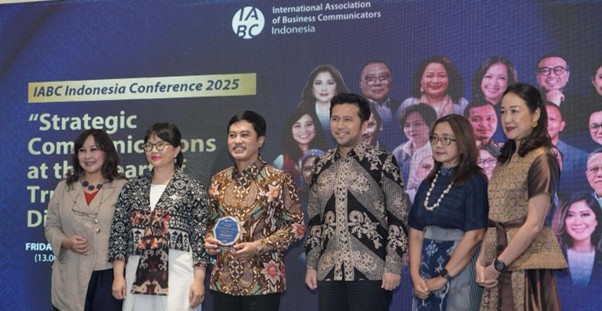
Keynote speakers with the Board of Directors of IABC Indonesia. From left to right: Elvera N. Makki, President of IABC Indonesia and Founder & CEO of VMCS Communications & Social Impact; Prof. Stella Christie, Vice Minister of Higher Education, Science, and Technology of the Republic of Indonesia; Prof. dr. Dante Saksono Harbuwono, Sp.PD-KEMD, Ph.D., Vice Minister of Health of the Republic of Indonesia; Emil Elestianto Dardak, Vice Governor of East Java; Shanti Ruwyastuti, Board Member of IABC Indonesia; Dwi Fatan Lilyana, Director of Human Resources and General Affairs of PT Pelabuhan Indonesia (Persero).
Elvera N. Makki, President of IABC Indonesia and Founder & CEO of VMCS Communications & Social Impact, emphasized that public trust has become the defining currency of modern leadership. “In today’s digital ecosystem, technology may accelerate messages, but only humanity can deepen their meaning. In the AI era, strategic communication must not only be accurate, but it must also be empathetic, ethical, and grounded in human rights,” she said.
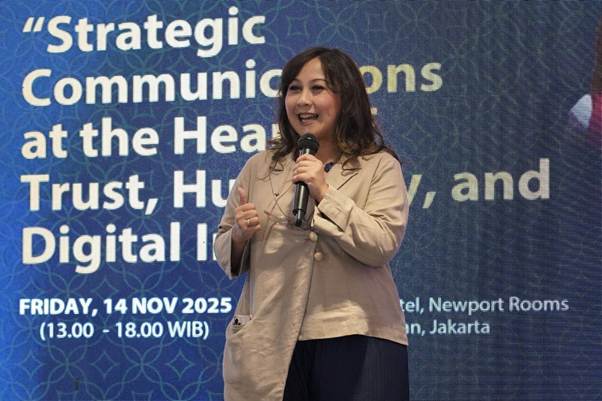
Elvera N. Makki (President of IABC Indonesia, Founder & CEO of VMCS Communications & Social Impact) officially opens the 2025 Conference, underscoring that communication rooted in trust, humanity, and digital impact is the foundation of leadership capable of inspiring meaningful action.
A recent survey by the Boston University Communication Research Center shows that four in five people support stricter protections against AI-driven deepfakes, and a majority want social media platforms to take greater responsibility for moderating misinformation without relying solely on government censorship. The findings reinforce that trust in the AI age is no longer a technical issue but a global strategic imperative.
Prof. Stella Christie, Vice Minister of Higher Education, Science, and Research (Dikti Saintek) of the Republic of Indonesia, while attending the IABC Indonesia Conference, delivered a keynote address to hundreds of business communicators on the importance of developing human-centered digital thinkers. She emphasized that the widespread spread of hoaxes online must be continually combated through education, research, and empirical evidence to significantly reduce challenges to the accuracy of information and communication in Indonesia. "Hoaxes are a huge threat and one of the most serious in Indonesia. This IABC Indonesia Conference is the right time for us to discuss it together."
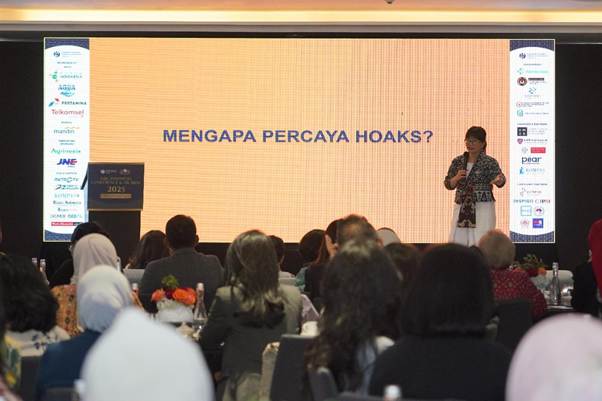
Keynote Speech by Prof. Stella Christie (Vice Minister of Higher Education, Science, and Technology of the Republic of Indonesia). In her speech, Prof. Stella emphasized the importance of developing human-centered digital thinkers. She stated that information in the digital space significantly influences how people process messages, particularly regarding hoaxes. This challenge requires ongoing education and collaborative efforts that encourage the use of research and empirical evidence to address issues in Indonesia and globally.
She highlighted two essential points for the audience’s reflection: why hoaxes spread, often inadvertently through ordinary people; and, building on that understanding, which concrete steps are needed to confront an issue that has become increasingly dangerous.
“More than 1,100 experts from 136 countries have identified misinformation and disinformation as among the most serious threats today. AI makes it easier to create fake news, and in the past year, the spread of false information created using AI technology has doubled,” said Prof. Stella. She explained four reasons why people believe hoaxes: political partisanship, cognitive reflection, prior knowledge, and heuristics.
“Fact-checking has long been our primary approach to combating hoaxes. However, there are behavioral solutions worth exploring—namely, proactive approaches such as ‘prebunking,’ accuracy nudges, systemic solutions like the ‘wisdom of the crowd,’ and long-term solutions such as education,” Prof. Stella added. “The core challenge with the business model of many social media platforms lies in monetizing attention—algorithms are designed to maximize engagement, not accuracy.”
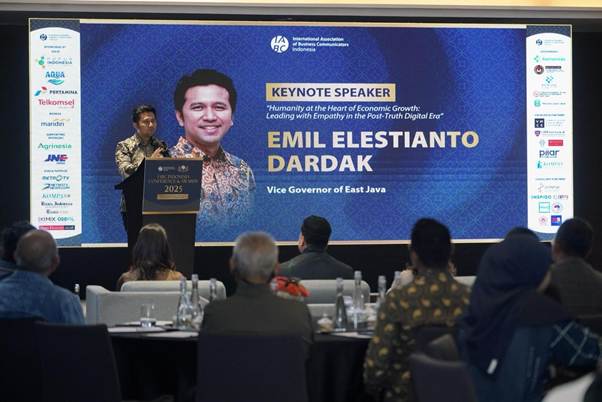
Keynote speech by Emil Elestianto Dardak, Vice Governor of East Java, at the 2025 IABC Indonesia Awards. He emphasized that one of today’s greatest communication challenges is the framing of information in digital spaces, where factual information can be perceived differently and negatively affect an organization or brand. Therefore, vigilance and responsiveness are critical as narratives rapidly form and spread on social media.
Continuing Prof. Stella's session, Dr. Ir. Emil Elestianto Dardak, Vice Governor of East Java, delivered a keynote speech underscoring that the greatest challenge in communication today is framing. In digital spaces, information may be factual, but when framed differently, public perception can shift—harming organizations and brands. Rapid framing, fueled by the pursuit of engagement, has affected many parties—not only politicians and public officials but also businesses and even MSMEs. He emphasized the need to stay alert and cautious in responding to this dynamic. “Framing is deeply connected to this conference’s theme: Strategic Communications at the Heart of Trust, Humanity, and Digital Impact. When we seek to build trust but fail to understand how to create digital impact, achieving that goal becomes difficult. We must be able to anticipate the flood of hoaxes and framing—with alertness, but also with care.”
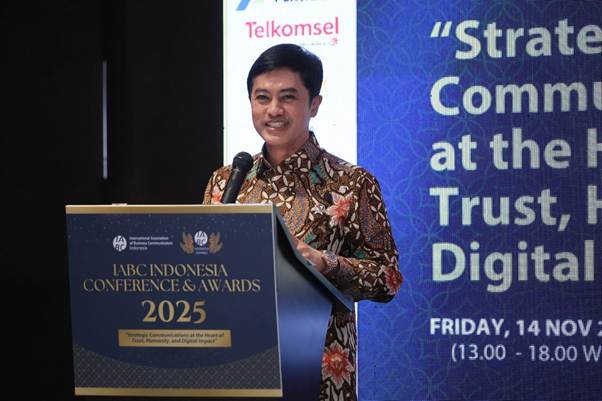
Keynote speech by Prof. Dr. Dante Saksono Harbuwono, Sp.PD-KEMD, Ph.D., Vice Minister of Health of the Republic of Indonesia, emphasized the importance of transparent, easy-to-understand health communication in an era of misinformation to build public trust. He noted that behavior change cannot occur instantly; people must feel emotionally connected. Therefore, communication must be supported by accurate data and grounded in empathy and real-life stories—not just numbers.
Speaking on the theme of humanity, Prof. Dr. Dante Saksono Harbuwono stated the importance of health communication in building public trust and improving the quality of life. “Trust is the most valuable asset in the health sector—and the most fragile. All aspects of the health system require improvement. The Ministry of Health continues to strengthen public communication that is transparent, easy to understand, and emotionally resonant—because changing behavior cannot happen instantly; it must reach the heart first. I appreciate IABC for elevating the topic of health communication.”
He continued, emphasizing that effective communication requires not only presenting accurate data but also empathy and stories rooted in real experiences—especially from communities in remote regions of Indonesia. The ability to transform statistics into narratives grounded in empathy is essential for public communication, especially digital communication. “I express my deepest appreciation to IABC Indonesia for strengthening health communication—not only within this space but also across public spheres,” Prof. Dante said.
Meanwhile, Bank Mandiri views strengthening digital innovation as part of its efforts to maintain stability and accelerate economic growth. By integrating ESG principles into service development, Bank Mandiri is building a more efficient, inclusive, and adaptive financial ecosystem—expanding access to financial services for households, MSMEs, and the productive sectors that drive GDP growth.
The use of technology to improve literacy, enhance transaction transparency, and support risk mitigation also aligns with government efforts to bolster the financial system amid global uncertainty. “Building trust in the digital era begins by placing humanity at the heart of every innovation. By embedding ESG principles into our business practices, Bank Mandiri continues to create digital impact that empowers people, strengthens communities, and protects the sustainability of our shared future,” said Monica Yoanita Octavia, Senior Vice President of Environmental, Social & Governance at Bank Mandiri.
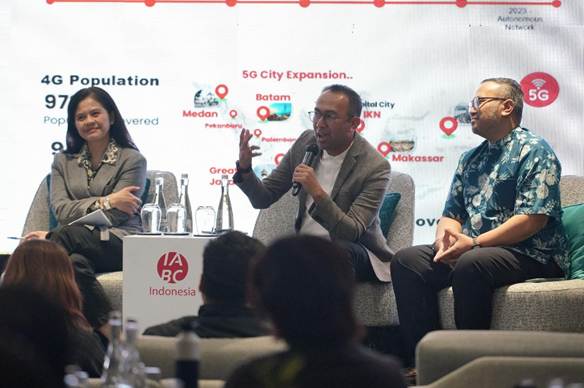
Panelist Abdullah Fahmi, VP of Corporate Communication & Social Responsibility at Telkomsel Indonesia (center), explains the critical role of companies in adopting AI technology and digitalization across all sectors in Indonesia—from government to enterprise and education.
Abdullah Fahmi emphasized, “Digital transformation is not just about having a strong network. We need responsible communication to ensure every step toward sustainability is understood, accepted, and preserved. As communicators, we build the trust that enables technology to deliver a really positive impact for the nation.”
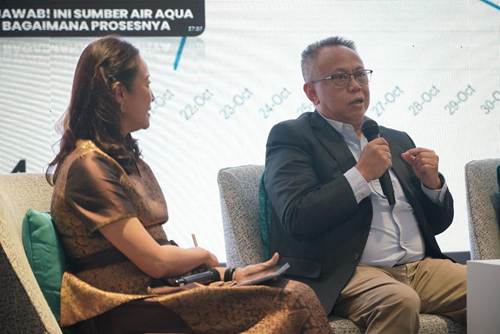
Arif Mujahidin, Communication Director of Danone Indonesia, reaffirmed the core purpose of communication: to shine and to shield—promoting stories that reflect company values while protecting the organization’s reputation.
Reflecting on Danone Indonesia’s communication approach, Arif said, “The secret formula for impactful communication is empathy—both when protecting and when promoting. At Danone Indonesia, we speak the language of our audiences, ensuring clarity that shapes positive public perception and, ultimately, communication that strengthens business sustainability.”
As she closed the IABC Indonesia Conference and Awards 2025, Elvera delivered a message for communication professionals nationwide: “When global surveys indicate that the public is beginning to doubt what they see and hear, the communicator’s role is to restore trust through transparency, integrity, and the courage to acknowledge limitations. Humanity is the compass. AI may accelerate the world, but only humanity can stabilize it. Moving forward, Indonesian communicators must lead the effort to connect data with empathy, technology with ethics, and innovation with social responsibility. Communication grounded in trust, humanity, and digital impact is the foundation of leadership that inspires action.”
Amid the growing complexity of digital challenges, IABC Indonesia reaffirms its commitment to serving as a home for communicators who aspire to lead with ethics, empathy, and meaningful impact.
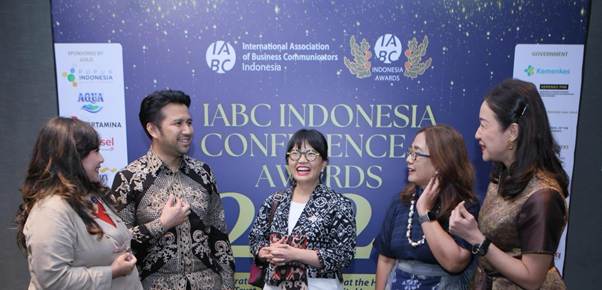
Keynote speakers with the Board of Directors of IABC Indonesia. From left to right: Elvera N. Makki, President of IABC Indonesia, Founder & CEO of VMCS Communications & Social Impact; Emil Elestianto Dardak, Vice Governor of East Java; Prof. Stella Christie, Vice Minister of Higher Education, Science, and Technology of the Republic of Indonesia; Shanti Ruwyastuti, Board Member of IABC Indonesia; and Dwi Fatan Lilyana, Director of Human Resources and General Affairs of PT Pelabuhan Indonesia (Persero), as Advisor to IABC Indonesia.
The IABC is a global association that serves as a barometer of communication trends. Headquartered in Chicago, Illinois, the organization oversees more than 100 chapters in 80 countries, including Indonesia. IABC Indonesia operates under the Indonesian International Communication Association, which has been active since 2019. With more than 1,000 Indonesian community members, the organization offers programs that provide insights, knowledge, and access to professional networks, as well as mentorship, awards, and international communication certifications. To join the community, please visit www.iabcindonesia.com and connect through LinkedIn and Instagram at @iabcindonesia.
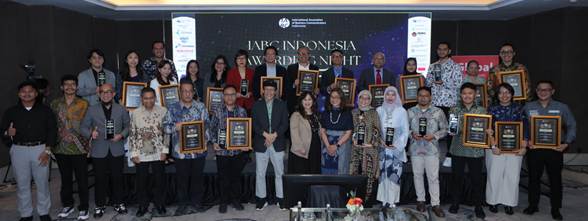
Honorees of the 2025 IABC Indonesia Awards Gather in Celebration
--------------------------------
Media Contact:
Malvin Adrianus
Email: malvin.adrianus@iabcindonesia.com and info@iabcindonesia.com
No. WA: 0851-5633-7189